
Our Policies
At Compass we believe it is important to be transparent and to behave with integrity at all times.
Compass Assurance Services is committed to delivering outstanding services to our clients, meeting our external requirements and providing a fulfilling work environment for our people. We recognise that effective and responsible risk management processes are required to achieve this.
Our risk objectives are to:
• Implement an effective system to assess and manage all risks within agreed tolerance levels and to meet legal obligations;
• Recognise and pursue opportunities in a structured and prudent way;
• Be risk leaders by doing what we say.
Compass has implemented a risk management system to achieve these goals. Our system is based on meeting the principles and guidelines of ISO 31000:2009 and our legal obligations.
We are committed to ensuring necessary resources are available to implement the risk management system. The system is reviewed by the Board on an annual basis and more frequently when circumstances change significantly.
Our workers have a responsibility to identify and consider risk when making decisions, comply with policies and procedures and to take responsibility for risk management as appropriate to their role. Managers are responsible for ensuring the effective implementation of the risk management system. The Board have overall accountability for risk management.
This policy is endorsed by the Board of Directors and the document is owned by the Managing Director. This Policy supports other Compass policies such as the Safety Policy.
Integrity
Kiwa operates in a professional, independent, impartial and ethical manner in all its activities. This entails carrying out work honestly, tolerating no deviation from approved methods and procedures and reporting actual findings and professional opinions
Conflicts of interest
Kiwa avoids conflicts of interest with any related entity in which it has a financial or commercial interest and to which it is required to provide services.
Fair business conduct
Kiwa respects standards of business ethics, competition compliance and integrity and will not do anything to bring its reputation into disrepute.
Anti-bribery
Kiwa prohibits the offer, gifting or acceptance of a bribe in any form, including kickbacks on any portion of a contract payment. No improper benefits will be received or provided in doing business.
Confidentiality and data protection
Kiwa respects the confidentiality and privacy of information of companies and persons doing business with Kiwa as well as of Kiwa employees and ensures processes are in place to adequately protect such information.
Competence
Kiwa employees will have the right capabilities and are competent to perform their job. This is supported by regular education and training.
Fair labour and ethical behaviour
Kiwa is aware of its social responsibility for its employees and the people, communities and environments in which it works. Kiwa acts with honesty and fairness while respecting human rights, equality, dignity and diversity of its employees
Health and safety
Kiwa provides a safe working environment to protect the health and safety of employees, customers and third parties.
Policy Statement
At Compass Assurance Services (“Compass”), we value the trust and confidence of our clients and other stakeholders. We see discretion and confidentiality as inextricable in living our values of service, honesty, integrity and sound investment.
It is our policy that the confidentiality of our clients is not compromised.
Governance
Ultimately our Managing Director and Board of Directors are responsible for our business’ performance.
The Managing Director will develop business systems and an audit plan in support of this policy.
Every worker is responsible for their conduct at work. This policy and its related procedures apply to all workers, managers and directors of Compass.
What we will do
1. Ensure all worker’s, contractors, board members and relevant business partners sign a confidentiality agreement;
2. Inform our clients and stakeholders of information that must be made public or disclosed to a third party such as an accreditation body;
3. Treat information about our clients as confidential unless obliged to do otherwise legally or as part of our accreditation obligations;
4. Maintain appropriate tools and systems to facilitate confidentiality;
5. Ensure contracts and other formal documents have provision for confidentiality as appropriate;
6. Understand how this policy effects our individual work environment;
7. Report on any violations of this policy;
8. Ask questions if anything is not 100% clear.
What we will never do
1. Act in any way that contravenes this policy;
2. Witness any act that contravenes this policy without reporting it;
3. Make arrangements with business partners that are not disclosed in a contractual agreement.
Questions
Any questions relating this policy should be directed to the Managing Director. If that’s not appropriate direct them to the Impartiality Committee Chair at [email protected]
Monitoring and Reporting
The effectiveness of this policy will be monitored. An annual review of the policy and its effectiveness will be undertaken by the Board of Directors.
Endorsement
This Policy is endorsed by the Board and the document is owned by the Managing Director.
At Compass Assurance Services (“CAS”), we provide our clients with assurance solutions including management system certification, assurance and training. We believe that the foundation for legitimate certification is an objective and impartial auditor and certification decision.
It is our policy that any accredited certification activity for a client is undertaken by employees who:
• Understand the concept of impartiality and agrees to the Kiwa Code of Conduct and Compliance;
• Have not provided management system consulting or internal management
system auditing services to the client organisation within the last 2 years;
• Have not provided customised management system training to the client organisation that involves the development of new or amended
system documents, forms, policies or procedures within the last 2 years.
• Have no direct or indirect interest in the client organisation;
• Have no undisclosed benefits that relates to the audit findings or success of the client.
It is our policy that any certification issued by CAS:
• Is endorsed by the General Manager;
• Represents a fair and unbiased assessment of the client’s management system
Our Leadership Team will use its best endeavours to appoint an Impartiality Committee that is made up of a majority of independent members to oversee the impartiality of our business, our auditors and their findings, and the decisions of certification managers.
Governance
Ultimately our Leadership Team is responsible for our business performance.
The General Manager will oversee the Impartiality Committee charter.
The General Manager will report to the Impartiality Committee as required.
The Leadership Team will develop business systems in support of this policy.
Every employee is responsible for their conduct at work. This policy and its related procedures apply to all contractors, staff, team leaders, managers, and committee members.
What we will do
• Take action to respond to any threats to our impartiality arising from the actions of other persons, bodies or organizations;
• Offer our accreditation body representatives such reasonable access, cooperation, courtesy, and without harassment; to enable monitoring
of
our compliance with the Accreditation Criteria;
• Not allow commercial, financial or other pressures to compromise impartiality;
• Report any situation that may present, or be perceived to present, employees or CAS with a conflict of interests to our General Manager or
National Development and Standards Manager (example: Any request to engage specific auditors outside of their region or competency);
• Disclose any potential or actual conflict of interest before accepting or commencing any work during the onboarding of auditors and
contractors;
• Not use auditors on client engagements unless they demonstrate that they have no conflict of interests;
• Record any actual or potential conflicts of interest using the Conflict of Interest Register and reviewing this on a quarterly basis;
• Evaluate our finances and sources of income and demonstrate to the Impartiality Committee and Board of Directors that commercial and
financial matters do not compromise impartiality;
• Understand how this policy affects our work environment;
• Report on any violations of this policy;
• Disclose all gifts from any source greater than $150 to the General Manager;
• Ask questions if we’re not 100% clear.
What we may do
• Arrange and participate as a lecturer in training courses, provided that, where these courses relate to management systems or auditing, CAS
will confine itself to the provision of generic information and advice which is publicly available, i.e. CAS will not provide company-specific
advice which contravenes the requirements below;
• Make available or publish on request information describing CAS’ interpretation of the requirements of certification audit standards
• Carry out activities prior to audit solely aimed at determining readiness for certification audit; however, such activities will not result in the
provision of recommendations or advise that would contravene this clause and they are not used to justify a reduction in the eventual
certification audit duration.
• Perform second and third-party audits according to standards or regulations other than those being part of the scope of accreditation
• Add value during certification audits and surveillance visits, e.g. by identifying opportunities for improvement, as they become evident during
the audit, without recommending specific solutions
• Deliver published courses to clients and the public at the clients’ premises or remotely providing it is in accordance with our Policy statement
What we will never do
• Engage with business partners or in activities that create a conflict of interest (example: Allocate only a specific auditor based on a
consultant’s request);
• Act in any way that contravenes this policy;
• Witness any act that contravenes this policy without reporting it;
• Certify another certification body or a subsidiary of CAS for its management system certification;
• Outsource audits to a management system consultancy organisation;
• Market or offer our services as linked with the activities of a management system consultancy firm;
• Provide management system consultancy services;
• Conduct internal audits of management systems for our certified clients;
• Certify a system where we have conducted internal audits of the system within a 2-year period;
• Make arrangements with business partners that are not disclosed in a contractual agreement.
• Certify a management system that poses an unacceptable risk
• Accept gifts that could be perceived to constitute a risk to impartiality. All gifts above $150 must be disclosed to the General Manager
Questions
Any questions relating this Policy should be directed to the General Manager.
Monitoring and Reporting
The effectiveness of this policy will be monitored. An annual review of the policy and its effectiveness will be undertaken by the Leadership Team.
Endorsement
This Policy is endorsed and accepted by the CAS Impartiality Committee.
Policy Statement
At Compass Assurance Services (“Compass”) the quality of our service, the development of our people and the satisfaction of our clients are what guides us.
We strive to be innovative, open-minded, lively, collaborative and skilled
Our Commitments
We are committed to:
• Meeting the requirements of our clients
• Maintaining effective systems that assist us to comply with requirements
• Embracing every opportunity to continually improve what we do and how we do it
• Ensuring our policies are accessible, communicated and understood
• Reviewing our quality objectives and performance against these objectives on a regular basis
• Contributing to the credibility of certification, assurance and training
• Acknowledging the needs of all parties that rely upon us or we have a significant impact upon
Monitoring & Reporting
The effectiveness of this policy shall be monitored. An annual review of its effectiveness shall be made by the Board.
Endorsement
This policy is endorsed by the Board of Directors and the document is owned by the Managing Director.
1. Respond to people in a timely manner, if someone asks us a question we answer them within 1 business day
2. Ensure key deliverables such as reports and certificates are delivered as soon as is practicable and no later than 10 days following the engagement
3. Ensure audits are planned appropriately with programmes ready at least 2 weeks before the engagement as practicable
4. Train our people, listen to them and contribute to their development and growth
5. Grow our business responsibly and sustainably by setting budgets for revenue, profit, client retention and new business and plans to achieve them
6. Help our clients by listening and acting upon feedback, providing tools, thought leadership and sharing our knowledge
7. Challenge the status quo, improve our systems regularly and resource opportunities for our people to manage interesting and challenging projects
Policy Statement
The Compass Assurance Services (“Compass”) certification mark is valued by our clients as sign of credibility in management system certification.
It is our policy to protect this mark and use our best endeavours to ensure its appropriate use by clients.
Our Commitments
We Will:
1. Control the use of certification marks and accreditation symbols via client agreements.
2. Only provide permission to use marks and accreditation symbols in legitimate circumstances
3. Check for proper use during client audits
4. Be sure that our mark is recognisable and clearly denotes the certification gained through Compass.
5. Provide our clients with access to marks and symbols to promote their business and the certification industry appropriately
Use of Certification Marks & Accreditation Symbols
Compass Assurance Services “Compass” clients must only use certification marks and accreditation symbols in a way that accurately reflects the scope of their certification. This includes sites and locations certified and the management systems certified.
Certification marks and/or accreditation symbols must not be used in a way that could be misinterpreted as endorsing a product certification, laboratory tests, calibration or inspection report. Product packaging is considered as that which can be removed without the product disintegrating or being damaged. Accompanying information is considered as separately available or easily detachable. Type labels or identification plates are considered as part of the product. The statement shall in no way imply that the product, process or service is certified by this means.
Accreditation symbols must always be used in conjunction with our logo and/or certification mark and your name and/or logo as well as the standard being certified.
This use of certification marks and/or accreditation symbols must not be misleading or ambiguous in any way.
Clients must accept the Use of Certification Marks & Accreditation Symbols conditions as included in their Compass contract before they may use a Compass certification mark and/or accreditation symbol.
Monitoring & Reporting
The effectiveness of this policy will be monitored. An annual review of its effectiveness will be made by the Board.
Endorsement
This policy is endorsed by the Board of Directors and the document is owned by the Managing Director.
At Compass Assurance Services (“Compass”), we rely on strong partnerships to achieve our strategic objectives. We are committed to ensuring that all outsourcing arrangements reflect our values of service, honesty, integrity and sound investment.
It is our policy that all material business partners acknowledge our code of conduct and meet the requirements of our outsourcing procedures. All outsourcing arrangement will be free from conflicting interests, bribes, kickbacks or personal benefit.
It is our policy that we will never outsource functions of impartiality and certification and never outsource audits to a management system consultancy firm.
What we will do
1. Check the reputation and credentials of material business partners;
2. Take responsibility for all activities outsourced to other parties;
3. Ensure all Compass documents relating to outsourcing are completed and stored;
4. Engage business partners that are in the best interests of Compass’s strategic goals and your business units business objectives;
5. Ensure all Compass Employees and Contractors understand how this policy affects the audits and activities they undertake for Compass.
6. Compass Employees and Contractors will report on any violations of this policy to a Compass Director or, if appropriate, to the Impartiality Committee Chairman.
7. Compass Employees and Contractors will raise the issue with Compass if not 100% clear on issues of impartiality.
What we will never do
1. Engage business partners that create a conflict of interest;
2. Act in any way that contravenes this policy;
3. Outsource audits to a management system consultancy;
4. Witness any act that contravenes this policy without reporting it;
5. Make with arrangements with business partners that are not disclosed in a contractual agreement.
Questions:
Any questions relating to this policy should be directed to a Director. If that’s not appropriate please direct the questions to the Impartiality Committee Chairman at [email protected]
Monitoring and Reporting
The effectiveness of this policy will be monitored. An annual report of its effectiveness will be made to the Board.
Review
This Policy will be reviewed at least annually.
Endorsement
This policy is endorsed by the Board of Directors and the document is owned by the Managing Director
Background
Compass Assurance Services Pty Ltd (CAS) is a privately owned business providing assurance and auditing services. We are governed by Kiwa and managed by the General Manager, who delegates responsibilities to our workforce. All policies are approved by the Board and aligned with our strategic plan and vision.
Policy Statement
CAS is committed to maintaining the integrity of its certification processes. This policy outlines the conditions under which a client’s certification may be suspended, withdrawn, or reduced in scope, ensuring actions are consistent, fair, and in line with ISO/IEC 17021-1:2015 and R2V3 COP requirements.
Suspension of Certification
Certification may be suspended in any of the following circumstances:
• the client’s certified management system has persistently or seriously failed to meet certification requirements, including failure to address nonconformities, legal compliance to OHS requirements, or SERI complaints, within the required timeframe
• the client does not allow surveillance or recertification audits to be conducted at the required frequencies
• the client enacts a serious breach of CAS certification guidelines, including misuse of certification marks, or misrepresentation of their certification status, that is not remedied within a defined timeframe.
• the client has voluntarily requested a suspension.
Note for DEWR ISMS certified clients, CAS shall email the Department within 48 hours of the decision.
For R2-certified clients, the following circumstances may initiate a suspension process:
• Illegal imports or exports
• Repeat NCs (when a minor becomes a major, or major is still a major)
• Five or more major NCs on an audit.
• Alteration and misrepresentation of the description of types and status of equipment and/or materials to mislead Auditors or downstream suppliers.
• Conviction or settlement of regulatory actions against the organization due to egregious environmental, health or safety violations
• Hiding or omitting transactions, equipment, materials, or any other form of deception to the Auditor, CB, and/or SERI.
• Selling untested equipment to end users.
• Failure to maintain necessary quality, environmental, health and safety management (QMS/EHSMS) systems issued by a CB that is accredited by an AB that is an IAF MLA signatory.
• Notification from SERI that the client failed to pay the licence fee
During suspension:
• The client’s certification is considered temporarily invalid.
• CAS will communicate in writing the reason for suspension, conditions for reinstatement, and any applicable timeframes (not normally exceeding six months).
Reactivation of Certification
Suspended certification shall be restored once CAS verifies that the issues leading to suspension have been effectively addressed.
For R2-certified clients, certification can be reactivated in case CAS withdrew the certificate in error. CAS shall determine if an audit is necessary before reactivating the certificate.
If the required action is not taken within the established timeframe, CAS will proceed with the withdrawal or scope reduction.
For R2-certified clients, CAS shall inform SERI of the certification reactivation.
Withdrawal or Reduction of Scope
Certification will be withdrawn or the scope reduced when:
• The client fails to resolve issues that led to suspension within the defined timeframe.
• Persistent or serious failure is confined to specific parts of the scope, in which case the scope will be reduced accordingly.
• For R2-certified clients, conducting fraudulent activities such as falsifying and/or altering records and documentation, withholding information, and failing to disclose the existence of regulatory enforcement actions
Note that for DEWR ISMS certified clients, CAS shall email the Department within 48 hours of the decision.
Note that for R2-certified clients, CAS shall send the withdrawal confirmation to SERI within 7 days of the certificate withdrawal.
CAS reserves the right to take further action deemed necessary to protect the integrity of certification, including public disclosure of withdrawal where applicable.
Impact on Integrated Management Systems
When certification to one or more standard(s) or scope is subject to suspension, reduction or withdrawal, CAS shall investigate the impact of this to the remaining certification. Decisions will ensure the overall certification remains valid and credible.
Endorsement
This policy is endorsed by the General Manager. Review of this Policy is done as needed when there are changes to the organisation structure, processes, or changes to JASANZ accreditation requirements.
The purpose of this procedure is to describe commitments Compass Assurance Services “Compass” makes with regard to public disclosure.
Audit Process
Compass maintains procedures for audit processes and making certification decisions such as granting, maintaining, extending, renewing, reducing, suspending or withdrawing certification.
Compass will make available upon request information describing these processes. This is the responsibility of the Managing Director.
Advertising and Public Available Information
Compass commits to ensuring the information provided to the marketplace including advertising or directly to clients is accurate and not misleading. Compass commits to taking action to rectify any errors or misleading information as quickly as is reasonably practicable.
Certification
Compass will make publicly accessible information about certificates granted, suspended or withdrawn including name, relevant normative document, scope and geographical location.
Compass Assurance Services make available information on active clients to JASANZ who publish this information in a public forum www.jas-anz.org.
On request from any party, Compass shall confirm the validity of a given certification. This may be by phone if the information is publicly available such as confirming a certificate status is active. For confirmation of withdrawal or suspension, a written request is required and Compass Assurance’s response will be in writing and is the responsibility of the Managing Director.
The purpose of this procedure is to describe the process that all stakeholders may initiate to lodge a complaint or an appeal with Compass Assurance Services Pty Ltd (CAS).
CAS is committed to continually improving our service and see feedback as a key input into this process. We encourage feedback so that we may resolve your concern in a constructive and timely manner and so that we may improve our business.
We take all complaints and appeal seriously and commit to resourcing the complaints resolution process in an appropriate manner. We take full responsibility for decisions related to complaints and appeals. We recognise that clients and stakeholders have the right to provide feedback or make a complaint. We commit to dealing with all complaints and appeals fairly and without prejudice at all times ensure confidentiality is maintained.
We commit to managing complaints and appeals in a timely manner and providing ongoing feedback throughout the complaint resolution process. CAS aims to have every complaint and appeal resolved within a 3-month period from lodgement.
The Complaints and Appeal Process
An appeal is an application for reversal of a decision. An appeal may be lodged with regard to an audit finding such as a non-conformance or a certification decision such as to grant, suspend or withdraw a certificate.
A complaint is a statement that something is unacceptable or unsatisfactory.
1. Lodging A Complaint or an Appeal
Appeals or complaints must in the first instance be lodged directly with Compass. These can be submitted by emailing the General Manager care of [email protected] or contacting 1300 495 855.
a. Initial Handling
All complaints and appeals relating to CAS or their clients or employees are scanned for validity and are then lodged in our corrective action database and given a unique corrective action number, responsible person, date of lodgement and target resolution date. A letter confirming the corrective action number and acknowledging receipt of the complaint are sent to the initiator within 5 working days.
2. Resolution Process
A member of the Leadership Team is responsible for managing the resolution process. This person will be someone who is competent, independent and has not been involved in the client specific audit or certification decision.
The responsible person will analyse the complaint, taking into consideration other complaints and the overall management system of the client and determine a cause. An action plan will then be developed to correct the current issue and for corrective action.
If the complaint in question refers to a certified client, then the responsible person will notify the client at an appropriate time.
The action plan will be approved by the General Manager and then actioned as soon as is reasonably practicable.
The responsible person may nominate action owners but is ultimately responsible for the resolution process.
Once the action plan has been deployed and completed a review is undertaken by a person not involved in the complaint to ensure the corrective actions were effective. Written confirmation of the actions taken and the status of the resolution will be sent to the initiator, and the complaint will be closed.
CAS shall only on the basis of consultation with its client and the complainant whether and to what extent, the subject of the complaint and its resolution shall be made public.
If the complaint has not been resolved within the nominated time frame, the complainant may escalate the complaint to the General Manager for immediate review.
3. Tracking Process
Initiators may contact CAS care of [email protected] or by phone on 1300 495 855 stating their name, address and the unique corrective action number.
The General Manager reviews all complaints and appeals. These are also reported monthly to the Kiwa Quality Lead – Australia and New Zealand.
4. Formal Review
All complaints and appeals are reviewed by the Leadership Team during the annual management review meeting.
5. Escalation
If unhappy with the outcome of the review of your complaint and the decisions made by CAS, then initiators have a right to make a formal complaint to JASANZ by accessing the link: Contact us • JASANZ.
All complaints or appeals unresolved within 3 months of our target resolution date are brought to the attention of JASANZ.
The following information will be forwarded to JASANZ:
• Written details of the original complaint
• Records of the review of the complaint
• Documented response to the complainant
• Any other correspondence with the complainant
1.1 Purpose
At Kiwa we are committed to a safer and more sustainable world. Living our purpose is reflected in the work we do for our customers as well as in the way we operate our company.
Kiwa employees, their families and loved ones, all trust us to keep them safe and healthy. The same is true for our customers, (sub)contractors and visitors, they all trust us not to cause harm and protect health and safety of all involved. This is our highest responsibility in line with our Kiwa values: Ambitious, Reliable and Engaged.
Our focus is on Zero harm. Everybody working for Kiwa should return home safe and sound every day. In all parts of our organization, we create a culture that builds upon a foundation of compliance and commitment to health & safety performance. Therefore, we will focus on continuous improvement of safety in all our activities.
The purpose of this policy is to outline our approach to achieving this.
1.2 Responsibility
The Kiwa Executive board defines the strategic direction regarding safety. They analyze with the Global Head of Health and Safety the Health & Safety KPIs in terms of ‘Leading Indicators’ and ‘Lagging Indicators’. KPIs are reported monthly by each country in the predefined Health & Safety format.
Every company/country manager is responsible and accountable for implementing all local legislation and the Kiwa specific safety standards and programs through the execution of a countrywide Health & Safety plan. They need to allocate the necessary resources, have to ensure correct application and regularly review and update the national plan.
Specific tasks and responsibilities can be delegated but not overall responsibility.
Finally, it is the responsibility of the Kiwa Executive Committee, (Company/country) Management and (Business Unit) Managers of Kiwa to ensure that this policy is implemented.
2 Kiwa “SAFE together”
The Kiwa “SAFE together” approach, is defined by Kiwa Corporate in close collaboration with Health & Safety experts from across the business. It summarizes the Kiwa vision on safety and is fully aligned with our values. We ARE Kiwa: Ambitious, Reliable and Engaged.
2.1 “SAFE together” program
“SAFE together” is the name of Kiwa’s safety culture program. It is our foundation to build upon for safe working practices. It does not replace the local safety procedures, trainings, and safety measures to be in place. It is an addition to local measures, to increase awareness for principles of safe working that are valid for all Kiwa employees and contractors.
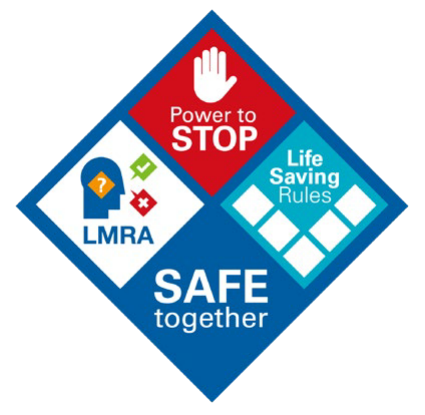
• “SAFE together” At Kiwa, we want everyone to go home safe and sound after every working day. It is a joint responsibility where it is up to all people in Kiwa to keep each other safe.
• “Power to STOP” Everyone at Kiwa has the authority to stop the work if it cannot be done safely and is stimulated to show the courage to indeed use that authority to stop if needed. There will not be negative consequences and management will support the decision. After using the “Power to STOP”, it is important to discuss and resolve the identified issue, before resuming the work.
• Last Minute Risk Assessment In addition to risk assessments and job hazard analyses conducted as part of the job preparation, a Last Minute Risk Assessment (LMRA) has to be executed before the actual start of the work. The purpose is to take a deliberate moment to reflect on the risks on hand (using the Life-Saving Rules) and make decisions to ensure safe execution of the job. This includes using the “Power to STOP” if the work cannot be done safely.
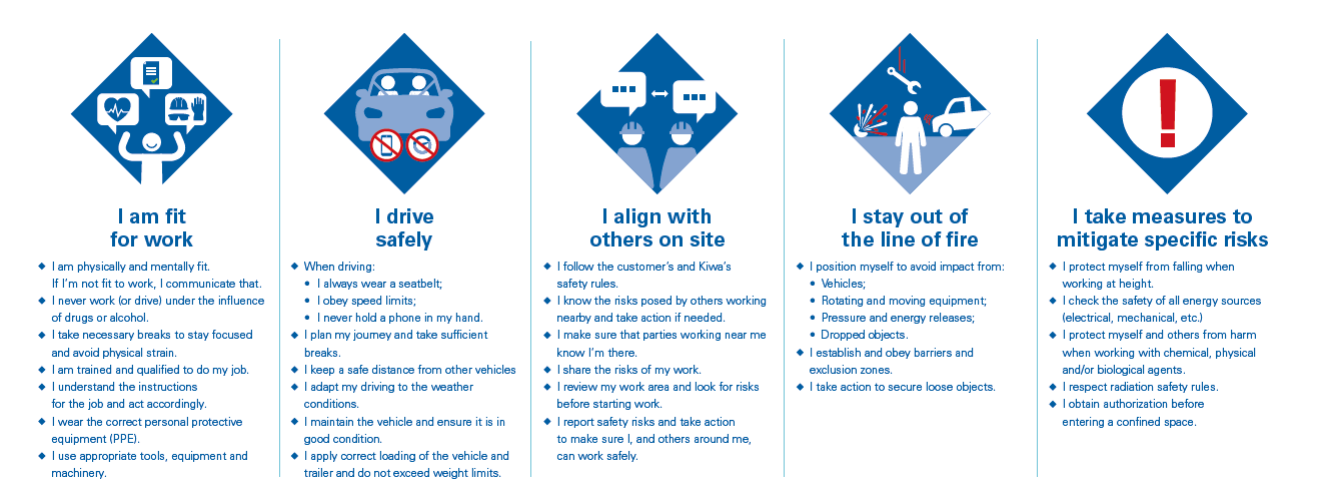
• Life-Saving Rules The Life-Saving Rules identify activities and behaviors that we expect from everyone at Kiwa to protect their safety and of those working with them. Adherence to the Life-Saving Rules reduces the risk / likelihood of a fatality occurring. They are not intended to cover all risks and hazards faced, but focus on the main things within the individual’s control. Life-Saving Rules complement, but do not replace, training, competence, (local) systems, regulations or procedures.
3 Health & Safety plan
Kiwa Companies/Countries develop, document, provide resources and annually update their Health & Safety plan, which shall cover at least the following topics:
• Compliance with local legislation
• Visible Felt Safety leadership
• Including training and safety walks
• “SAFE together” including Life-Saving rules
• Incident and near miss reporting
• Reporting standards and tools
• Analyses and corrective actions
• Reporting to Kiwa corporate: root cause analysis and measures to prevent these incidents a next time, and promote cross-business knowledge sharing and learning
• Operational discipline and Process safety
• Contractor safety
3.1 Compliance with local legislation
Kiwa Company/Country management shall comply with its statutory duty to ensure the health, safety and wellbeing at work of its employees, (sub)contractors and visitors to its premises using local legislation as a minimum standard.
3.2 Visible felt leadership
Kiwa Company/Country Managers endorse Kiwa’s “SAFE together” framework in their local health & safety plan and implement this as a standard. Their leadership in this topic is seen and felt:
• Health & Safety is a regular topic in meetings with all Kiwa workers. The Power to STOP is voiced by management and more important: management actively supports workers who are using their “Power to STOP”.
• The implementation of “SAFE together” means that there are standards and evidence of (recurring) training of each employee on these topics.
• Monitoring activities are in place:
• Safety walks by top management to support safe work and to stand by all colleagues and to have the dialogue on safe behavior.
• Safety walks by operational managers (team leader, technical supervisors…) as experts in the job and safety matters to coach and focus on safe behavior.
Next to the implementation of the Life-Saving Rules, assurance shall be provided that the Visible Felt Leadership (VFL) training plan is in place and execution is monitored through an overview of completed trainings.
3.3 “SAFE together” including Life-Saving Rules
“SAFE together” including Life-Saving Rules are defined at Corporate level (see 2.1).
The Company/Country Managers are responsible to:
• Implement “SAFE together” including the Last-Minute Risk Assessment and ensure active leadership support of workers using their “Power to STOP”.
• Implement the Life-Saving Rules:
• Ensure that the rule set is communicated and implemented across the organization.
• Train workers on Kiwa “SAFE together” and Life-Saving Rules.
• Deploy required safety measures (e.g., risk assessments, PPEs, training, work permits, procedures…) and assign adequate resources.
• Monitoring activities are in place at all levels to check whether these rules are followed rigorously, as it will have the greatest impact on eliminating fatalities.
3.4 Incidents and near misses
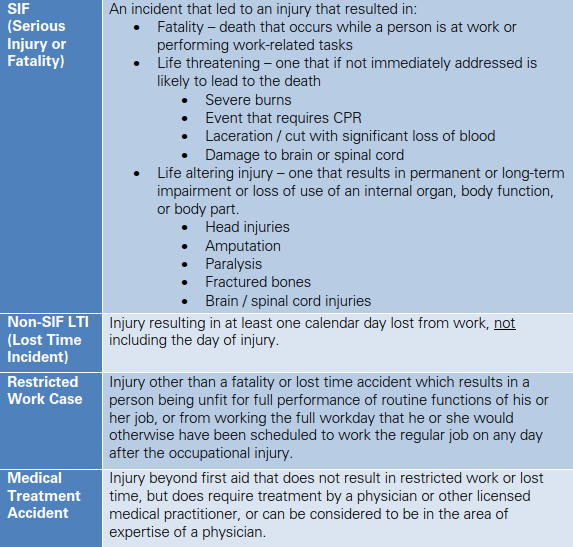
The Company/Country Managers are responsible to analyze, define learnings and make a preventive action plan for all Potential Severe Injury and Fatality (pSIF) and Recordable Incident Cases (definitions see below).
The Company/Country Managers are responsible to report on a monthly basis all recordable incidents to Kiwa Corporate in line with reporting deadlines and report any Serious Incident and Fatality (SIF) as soon as possible (< 24 hours after the event). Also reporting to local authorities is done in line with the local legislation and requirements.
Content of the monthly safety reporting:
• Number and character of recordables
• What happened?
• Why did it happen (root causes)?
• Which actions did we take?
• What did we learn?
• As part of Safety Route 2028, data for more detailed analyses, including leading indicators will be added. Also a link to the LSRs and analysis along a Just Culture framework will be added over time.
Local near miss reporting is strongly advised to generate preventive learnings – reporting to Kiwa Corporate is however not mandatory for this category.
In case of severe injury and fatalities (SIFs):
• The country/company manager (cc EVP) must report asap to the Kiwa CEO and Global Head of Health and Safety latest 24 hours after the event.
• Kiwa CEO reports to SHV responsible EVP of SHV Holdings within 24 hours.
• Global Head of Health & Safety reports to SHV Corporate Director ESG by phone or WhatsApp.
• The country/company manager has to conduct a de-brief of the SIF, including a root cause analysis and lessons learned to the Kiwa CEO, Kiwa Executive Sponsor and Global Head of Health and Safety.
Global Head of Health and Safety ensures:
• Monthly feedback to all country/company managers and Executive Committee on
recordables including lessons learned to promote cross-business knowledge
sharing and learning
• Monthly consolidated reporting to SHV
• Monthly analysis of this Safety KPI by Management Board and the Global Head of Health and Safety
The following definition of recordables is to be applied:
3.5 Operational Discipline and Process safety
The Company/Country Managers are responsible to ensure:
• The implementation of this policy in specific procedures and management systems designed to suit its business while complying to the latest national regulations and to review this on a regular basis and update as appropriate
• Risk assessments are in place at the local level for every safety critical role by 2025
• Risk mitigation plans are implemented locally with a continuous improvement mindset and a year action plan
• This also means:
• Provide health surveillance as appropriate
• Provide at Kiwa cost any protective clothing or equipment, where risks are not adequately controlled by other means
• Provide appropriate training and confirmed competence
• Their Company/Country keeps up with developments in technology and anticipate accordingly
• A process is in place to consult with employees or their representatives on matters affecting their health and safety
• Someone competent is assigned to assist in health and safety matters in a graded approach depending on the risks at hand.
3.6 Contractor Safety
The Company/Country Managers are responsible to ensure:
• Kiwa hired contractors adhere to the applicable safety standards. Reference to our safety standards are made in the order confirmation
• Operational subcontractors carrying out works on behalf of Kiwa have completed LSR training
4 Kiwa employees and operational subcontractors
Every person working for Kiwa in any capacity, including (sub)contractors, is responsible for:
• Taking reasonable care of themselves, their own health and safety and the health and safety of anyone else who may be affected by their work activities.
• Co-operating with Kiwa to achieve appropriate standards of health and safety
• Training themselves in Kiwa’s “SAFE together”:
• All know that they have the “Power to STOP” the work if it cannot be done safely. Having the power means having the authority and the courage to stop.
• All commit to do a Last Minute Risk Assessment to evaluate the risks in the light of the Life-Saving Rules and the specific situation they are working in.
• All know the Life-Saving rules and act upon them
• Adhering to the standards in line with their trainings and professional qualifications
• Following all HSE instructions given by the employer and/or a customer when working at their site
• Using equipment provided by Kiwa correctly, including personal protective equipment, in accordance with training or instructions
• Reporting to the appropriate manager any serious health or safety concerns they are unable to resolve themselves
• Not interfering with or misusing anything provided for health, safety and welfare purposes
• Complying with their legal duties including a medical check if required to perform certain duties (at the costs of Kiwa)
At Compass Assurance Services (“Compass”), we value the trust and confidence of our clients and other stakeholders. We see ensuring all staff are of ‘fit and proper person status’ is essential for delivery of our services.
It is our policy that all staff be deemed to be of fit and proper person status prior to engagement with Compass Assurance, and that we ensure staff maintain fit and proper person status during their engagement with Compass Assurance.
Responsibility
Ultimately our Managing Director and General Manager are responsible ensuring fit and proper person status of all staff.
The General Manager will develop a self-declaration process to support this policy. Clients with specific fit and proper persons identified during the application process.
Every worker is responsible for their conduct at work and declaring they are of fit and proper person status. This policy and its related procedures apply to all workers, managers and directors of Compass.
What we will do
1. Auditors will be required to submit a self declaration that they are of fit and proper person status as per form 3015.
2. Client specific fit and proper person requirements will be identified during the application process, this will be recorded on the application duration form 3003
3. Auditors assigned to clients with additional fit and proper persons requirements will be required to provide additional information (such as police checks or working with children checks) to support their fit and proper person status.
4. Treat information about our clients as confidential unless obliged to do otherwise legally or as part of our accreditation obligations;
5. Maintain appropriate tools and systems to ensure staff maintain fit and proper person status;
6. Ensure contracts and other formal documents have provision for confidentiality as appropriate;
7. Understand how this policy effects our individual work environment;
8. Report on any violations of this policy;
9. Ask questions if anything is not 100% clear.
What we will never do
1. Act in any way that is contravenes this policy;
2. Witness any act that contravenes this policy without reporting it;
3. Make arrangements with business partners that are not disclosed in a contractual agreement.
Questions
Any questions relating this policy should be directed to the Managing Director. If that’s not appropriate direct them to the Impartiality Committee Chair at [email protected]
Monitoring and Reporting
The effectiveness of this policy will be monitored. An annual review of the policy and its effectiveness will be undertaken by the Board of Directors.
Endorsement
This Policy is endorsed by the Board and the document is owned by the Managing Director.
Compass Assurance Services Pty Ltd is committed to providing you with the best possible customer service experience. Compass Assurance Services Pty Ltd is bound by the Privacy Act 1988, which sets out a number of principles concerning the privacy of individuals.
Collection of your personal information
There are many parts of the site which can be viewed without providing personal information, however, there are some pages where you are required to submit personally identifiable information. This information may be needed in the provision of a service, or to allow recovery of a lost password.
Sharing of your personal information
We may occasionally hire other companies to provide services on our behalf, including but not limited to handling customer support enquiries, processing transactions or customer freight shipping. These companies will be provided only the personal information they need to deliver the service. Compass Assurance Services Pty Ltd takes reasonable steps to ensure that these organisations are bound by confidentiality and privacy obligations in relation to the protection of your personal information.
Use of your personal information
For each visitor to the site, we collect the following non-personally identifiable information, including but not limited to browser type, version and language, operating system, pages viewed while browsing the site, page access times and referring website address. This collected information is used solely internally for the purpose of gauging visitor traffic, trends and delivering personalised content to you while you are at this site.
Changes to this privacy policy
Compass Assurance Services Pty Ltd reserves the right to make amendments to this Privacy Policy at any time. If you have objections to the Privacy Policy, you should not access or use the site.
Accessing your personal information
You have a right to access your personal information. Requests must be submitted in writing.
Contacting us
Compass Assurance Services Pty Ltd welcomes your comments regarding this privacy policy. If you have any questions about this privacy policy or would like further information, please contact us.
Call: 1300 495 855
Post: Attn: Privacy policy,
Compass Assurance Services Pty Ltd,
PO Box 2008
Tingalpa QLD 4173
E-mail: [email protected]
Our Values
Our Mission is to help clients grow and manage risk by being the leader in innovation and service. Our mission is underpinned by our values.
Respond quickly to all inquiries
Issue certificates and reports promptly
Employ skilled and committed auditors and workers
Actively seek client feedback and act upon it
Pay our suppliers on-time
Respond to clients needs
Recognise auditors role in client management
Engage external stakeholders as appropriate
Actively seek and explore new ideas
Embrace continual improvement
Use technology in smart ways
Find and implement game changers
Certification doesn’t need to be tedious
Come to work and make a difference
Be proud of the contribution you have made
Make clients smile from time to time
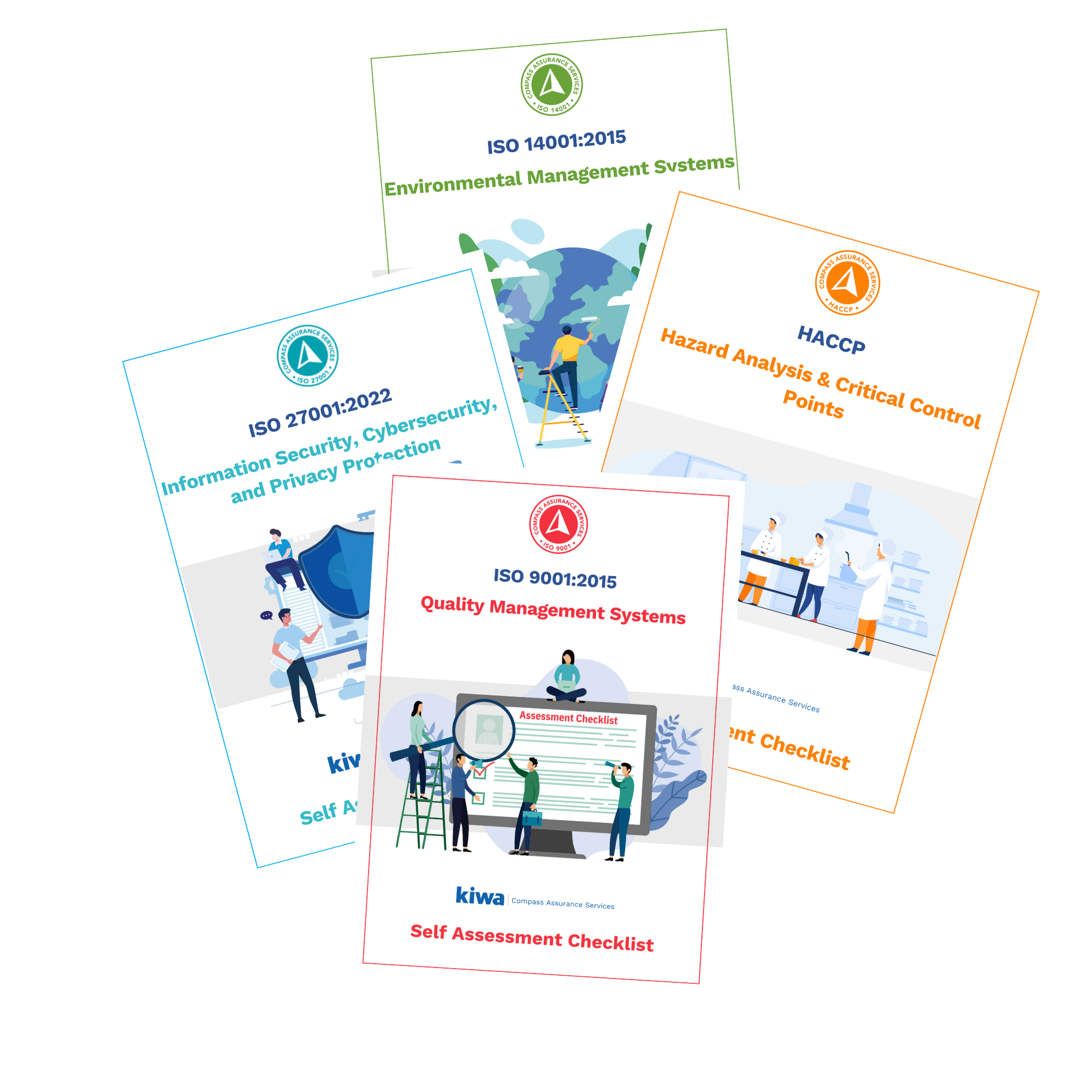
Free Self-Assessment Checklists
Download your Free Self-Assessment Checklists.

